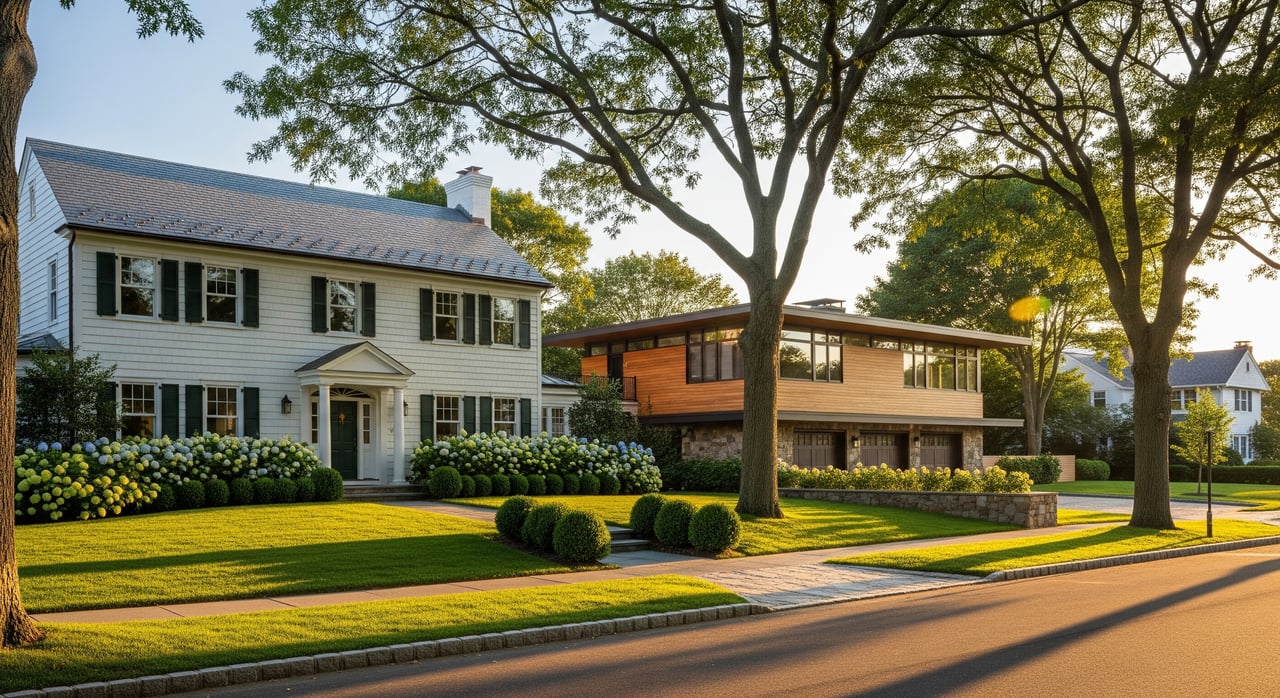
Thinking about buying or selling in Greenlawn and stuck between a classic Colonial and a practical Ranch? You are not alone. Each style shines in different ways, from day-to-day livability to renovation potential and long-term resale. In this guide, you will learn the key differences, what to inspect, and how local factors in the Town of Huntington can shape your decision. Let’s dive in.
Quick style cues: Colonial vs. Ranch
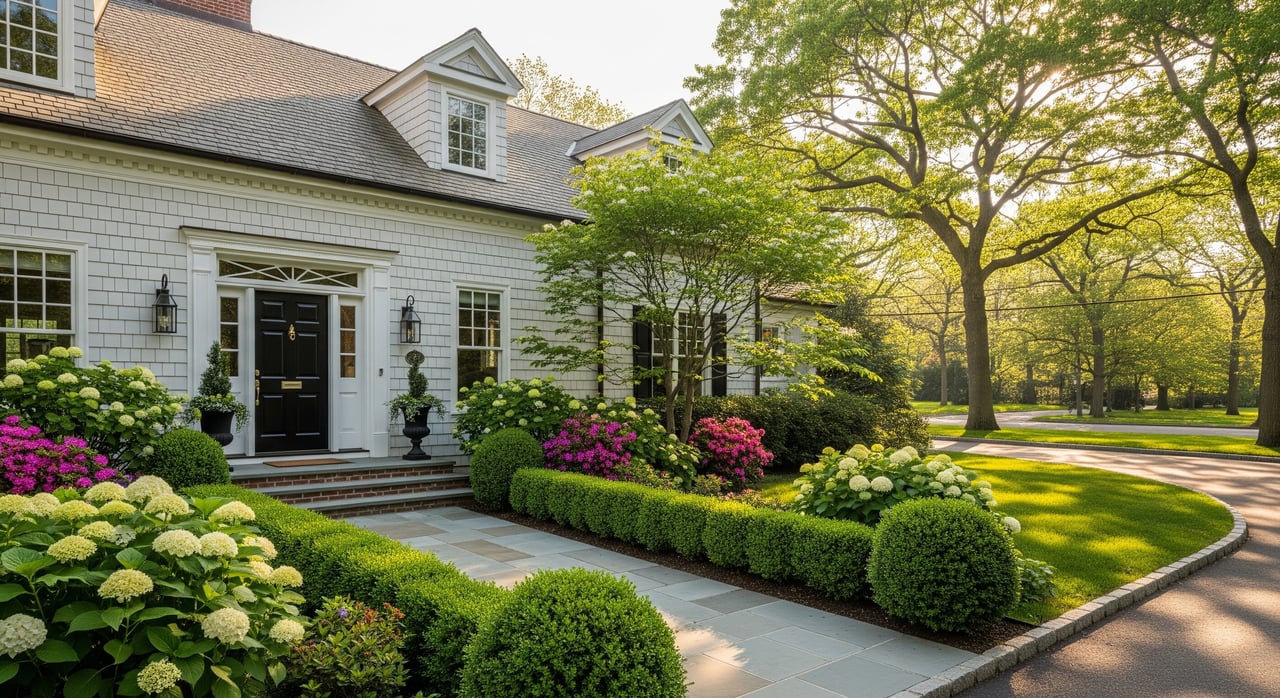
Colonial exterior and layout cues
- Symmetrical front with a centered door and evenly spaced windows.
- Two or two-and-a-half stories with a gabled or hipped roof; dormers are common.
- Formal entry with a portico, shutters, and double-hung multi-pane windows.
- Interior often features a central staircase, a defined foyer, separate living and dining rooms, and bedrooms upstairs.
Ranch exterior and layout cues
- Single-story profile with a low-pitched roof and wide eaves.
- Asymmetrical front; attached garage is often prominent.
- Large picture windows or sliding doors opening to the backyard.
- Interior offers single-level living. Later ranches lean more open concept. Basements are common, and raised ranch variations include a partially exposed lower level.
Daily living: how each floor plan feels
Colonial living patterns
- Bedrooms upstairs create separation between living and sleeping zones.
- A central hallway and defined rooms provide structure and privacy.
- Attics in many two-and-a-half story Colonials can offer storage or conversion potential.
Ranch living patterns
- Everything on one level makes daily movement easy.
- Open or semi-open layouts can feel airy and social.
- Finished basements add recreation or office space, often with good light in raised ranches.
Construction basics to inspect in Greenlawn
Many Greenlawn homes were built from the early to mid 20th century through the post-war building boom. Age varies by street, which affects what you should inspect.
- Foundations and basements. Check for water intrusion, drainage, and waterproofing. Verify foundation type and condition.
- Framing. Older Colonials may be balloon framed; most later homes are platform framed. Framing type affects the ease of adding dormers or a second story.
- Electrical and plumbing. Older systems may need modernization. If a home predates 1978, plan for safe lead-paint practices during renovations. Mid-century homes can have asbestos-containing materials that require proper remediation.
- Roof and envelope. Roof pitch and dormers on Colonials, or wide eaves on Ranches, affect roofing complexity and attic ventilation.
Lot, zoning, utilities: what matters locally
Greenlawn sits within the Town of Huntington. Rules for additions, pools, and accessory structures depend on zoning, setbacks, lot coverage, and floor area limits.
- Zoning and setbacks. Before planning any addition, confirm the property’s zoning district, required setbacks, and maximum coverage with the Town of Huntington.
- Lot size and shape. Some streets offer deep rear yards suitable for additions or patios. Others are tighter, which can limit expansion options.
- Sewer vs. septic. Suffolk County’s health regulations matter when you add bedrooms or bathrooms. A septic system may need upgrading to support more fixtures, while a sewer connection can change what is allowed. Confirm parcel utilities during due diligence.
- Flood zone. Always verify FEMA flood zone status and insurance requirements for a parcel before you bid. Some projects may require elevation or added mitigation.
Accessibility and aging in place
Why Ranch homes excel
- Single-level living reduces barriers and makes accessibility upgrades straightforward.
- It is easier to add wider doorways, ramps, and accessible bathroom layouts without major structural changes.
Adapting a Colonial
- Stairs can be a challenge. Creating a main-level bedroom suite often requires a reconfiguration or an addition.
- Options include a stairlift, a residential elevator with structural planning, or converting an existing first-floor room and bath into a primary suite.
- In both styles, check hallway widths, threshold transitions, and bathroom layouts if accessibility is a priority.
Renovation potential and permitting
Where Colonials offer flexibility
- Vertical additions. Dormers or finishing an attic can add bedrooms and baths if roof structure and head heights allow.
- Second-floor expansions on one-and-a-half story variants are common when framing supports it.
- Basements can add living area with proper egress and moisture control.
Where Ranches shine for expansion
- Lateral additions. Side or rear bump-outs blend naturally with a single-level plan.
- Garage conversions or finished basements can add living area more cost-effectively if the work is permitted and safe.
- Adding a full second story is possible but typically more complex and expensive due to structural reinforcement, new stairs, and HVAC redesign.
Local drivers, constraints, and red flags
- Permits and approvals. Additions and major remodels require Town of Huntington permits. Projects that exceed zoning may need variances. Septic changes run through Suffolk County health authorities.
- Historical or design sensitivities. Certain areas may have local reviews or expectations. Confirm before you design.
- Flood and elevation constraints. If a property sits in a flood zone, the scope of your renovation can change due to insurance and code requirements.
- Budget for the usual suspects. Basement moisture mitigation, electrical service upgrades, roof replacements, asbestos or lead-safe work, and HVAC updates are common line items in older Long Island homes.
Smart permitting steps before you buy
- Ask for permit history and certificates of occupancy for any finished basements, additions, or garage conversions.
- Verify lot dimensions and structures against town records.
- Confirm sewer or septic details with Suffolk County health authorities, especially if you plan to add baths or bedrooms.
Resale appeal in Greenlawn
- Who tends to pick Colonials. Many buyers who want bedrooms upstairs and formal gathering spaces lean Colonial. The layout supports separation between entertaining and sleeping areas.
- Who tends to pick Ranches. Buyers focused on single-level living and easier accessibility often prefer Ranches, including downsizers and multi-generational households.
- Location drivers. Proximity to Port Jefferson Branch LIRR stations, schools, parks, and shopping can boost demand and help a home sell faster.
- Updates that pay back. Across both styles, modern kitchens and primary bathrooms, additional full baths, and added living area are reliable value drivers when they fit the neighborhood norm.
Buyer checklist for Greenlawn Colonials and Ranches
Use this quick list to focus your search and due diligence.
- Verify lot size, setbacks, and allowable coverage with the Town of Huntington.
- Confirm whether the home is on sewer or septic and note any known issues or upgrade requirements.
- Check FEMA flood zone status and ask about local flood history. Request an elevation certificate where relevant.
- Confirm the assigned school district using official maps. District lines can change, so verify for the specific parcel.
- Order a thorough inspection. Focus on basement moisture, roof age, electrical capacity, HVAC age and fuel type, and the presence of asbestos or lead-based paint in older homes.
- Ask for permit history and certificates of occupancy, especially for finished basements or older additions.
- Consider your commute and day-to-day routine. Note distance to LIRR stations and whether the layout supports hybrid work.
- Plan for your future. If you want to age in place, a Ranch may reduce future renovation costs. If you value separation of spaces and potential attic or second-floor expansion, a Colonial may fit better.
Colonial vs. Ranch: which fits your goals?
If you want classic curb appeal, separation between living and sleeping spaces, and the chance to add dormers or finish an attic, a Colonial is a strong bet. If you want single-level living with straightforward accessibility and an easier path to add space with side or rear additions, consider a Ranch.
In Greenlawn, the right choice often hinges on your lifestyle, the specific lot and utilities, and how much renovation you want to take on. A careful look at zoning, sewer or septic capacity, and potential red flags can keep your plans on track and your budget in check. When you compare similar homes by lot size, bedroom count, and updates, you will be well positioned to buy with confidence or prep your sale for a strong result.
Ready to talk through your options and see tailored comps for Greenlawn? Reach out to Team Levine for local guidance, on-point pricing, and a step-by-step plan for your move.
FAQs
What defines a Colonial vs. a Ranch in Greenlawn?
- Colonials are typically two stories with a symmetrical front and bedrooms upstairs. Ranches are single-story with a lower roofline, an attached garage, and easier single-level living.
How do Town of Huntington zoning rules affect additions?
- Zoning sets setbacks, lot coverage, and height limits that control addition size and placement. Always confirm your property’s zoning district and requirements before designing a project.
Does sewer vs. septic change renovation plans in Greenlawn?
- Yes. Adding bedrooms or baths on a septic system can trigger capacity upgrades. Sewer connections can change what is feasible. Verify your parcel’s utilities and consult the appropriate county and town offices.
Is it easier to add a second story to a Ranch or a Colonial?
- Colonials often accommodate vertical expansions more readily if framing and roof structure allow. Adding a full second story to a Ranch is possible but usually more complex and costly.
What inspections matter most for older Greenlawn homes?
- Prioritize basement moisture, roof age, electrical service capacity, HVAC condition, and the potential presence of asbestos or lead paint in pre-1978 homes.
How does LIRR access affect resale demand in Greenlawn?
- Proximity to Port Jefferson Branch stations often boosts buyer interest. Shorter commute times can translate to stronger demand and better resale potential.
Do flood zones impact parts of Greenlawn home purchases?
- Flood zone status can affect insurance costs and renovation requirements. Always check FEMA flood maps for the parcel and request any available elevation certificates.